
What is the status of these stamps?

Earlier, we discussed the revolutionary stamps, the so-called Viennese printings. However, Indonesia has had more stamp issues that do not appear in every catalog. These stamps preceded the Viennese printings and also belong to the revolutionary period from 1945 to 1949. On August 17, 1945, the independence of the Republic of Indonesia was proclaimed by Soekarno-Hatta. However, the postal service was still in the hands of the Japanese occupiers. It was not until September 27, 1945, that the Indonesians were able to take over the Main Post Office in Bandung and renamed the postal service Djawatan PTT. But the joy was short-lived, as Dutch and Allied troops advanced and took over the postal service again.


 Nevertheless, the Indonesians managed to add their new country name, Republic of Indonesia, to existing stamps, usually by means of overprints. These were stamps from the Dutch East Indies that had not been overprinted by the Japanese occupiers.


 But also stamps issued by the Japanese occupiers that were used in Indonesia.

 To celebrate six months of independence, two stamps printed by the Indonesian Post were issued on January 12, 1946. A 10+10 sen stamp and a 20+20 sen stamp. The first official stamps issued by the independent Indonesian Post?


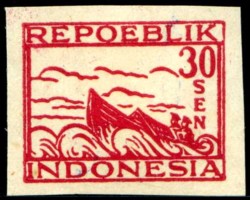
 On June 1, 1946, two more stamps followed, of 5 sen and 20 sen, and on July 1, 1946, one of 30 sen. The unperforated 30 sen stamp is a proof print. The stamps were printed in Yogyakarta.


 A large series of stamps, printed in Yogyakarta, appeared during 1946 and 1947 to commemorate the struggle for freedom. Such as the 5 sen stamp depicting a view of burning Bandung on March 24, 1946: Bandung Lautan Api. The stamps were poorly perforated and often also available unperforated.


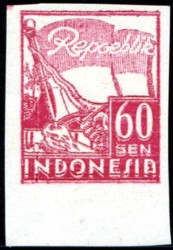
 In addition to the commemorative series, three neutral stamps were also issued to form the long-running series. These were stamps in denominations of 50 sen, 60 sen, and 80 sen. The 80 sen stamp is rare. The unperforated 60 sen stamp is a proof print.

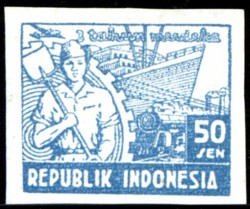
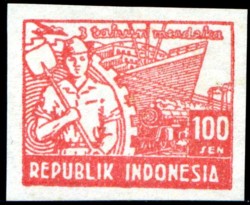
 On August 17, 1948, two stamps were issued to commemorate three years of independence. One of 50 sen and one of 100 sen. The stamps were initially available only unperforated and gumless, but later also perforated.
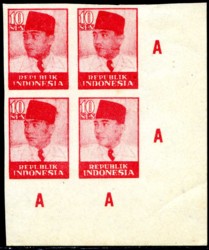
 In December 1949, stamps were printed featuring an image of President Soekarno. However, these stamps were never made available at the counters. They exist in both perforated and unperforated versions and are always gumless.
 Two postage due stamps were also issued in 1948, overprints on postage due stamps from the Dutch East Indies. Some collectors may be familiar with a few of the stamps shown. But what is their status? Are they recognized and collectible? The answer is provided by the Indonesian PTT itself! On April 1, 1964, the Indonesian PTT issued a stamp to commemorate the 100th anniversary of the postage stamp in that country.

 The 30 sen stamp issued on July 1, 1946, is clearly recognizable. But was that the only thing? No; on the 35th anniversary of Indonesia's independence, a series of three stamps was issued on August 17, 1980, featuring images of stamps from the long series of late 1946 and early 1947. But the third stamp? With an image that does not appear in the list above?

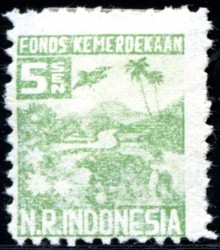
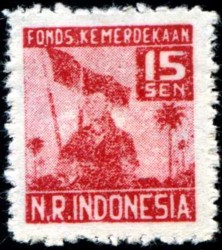
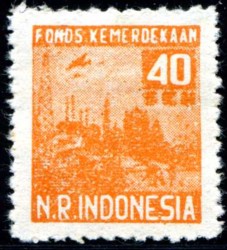
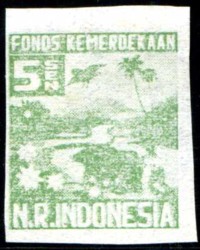
 The explanation is as follows. The revolutionary stamps mentioned above were issued exclusively on the island of Java. On the island of Sumatra, other stamps were used, which were usually overprinted or newly printed in Palembang, South Sumatra. Such as the Fonds Kemerdekaan (Freedom Fund) stamp of 15 sen. This stamp came from a series of three issued on May 17, 1946, and printed in Palembang. The unperforated stamp is a proof print.


 What do you think of it? Now that the Indonesian PTT has recognized these stamps as postage stamps itself?
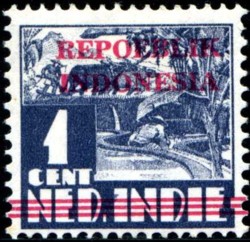
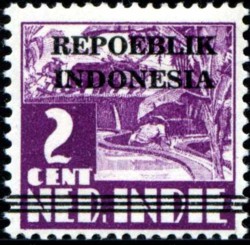
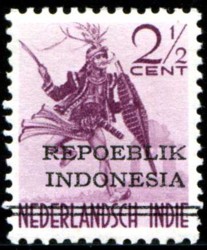
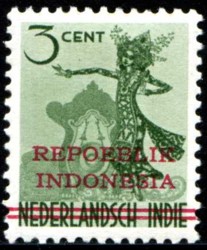
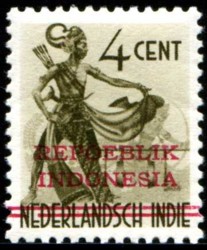 Nevertheless, the Indonesians managed to add their new country name, Republic of Indonesia, to existing stamps, usually by means of overprints. These were stamps from the Dutch East Indies that had not been overprinted by the Japanese occupiers.
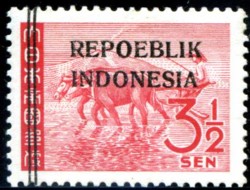
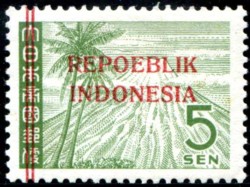
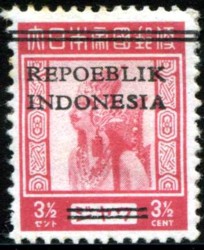
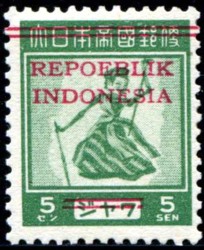
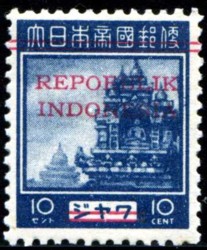
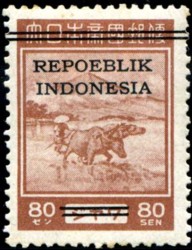 But also stamps issued by the Japanese occupiers that were used in Indonesia.
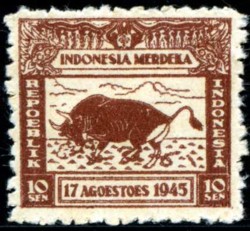
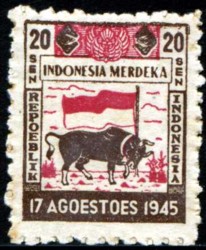
 To celebrate six months of independence, two stamps printed by the Indonesian Post were issued on January 12, 1946. A 10+10 sen stamp and a 20+20 sen stamp. The first official stamps issued by the independent Indonesian Post?
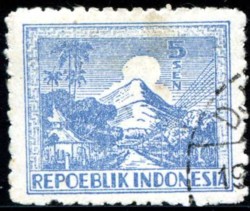
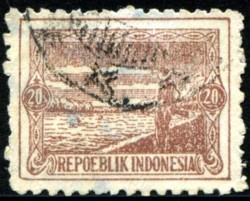
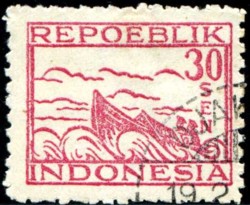 On June 1, 1946, two more stamps followed, of 5 sen and 20 sen, and on July 1, 1946, one of 30 sen. The unperforated 30 sen stamp is a proof print. The stamps were printed in Yogyakarta.
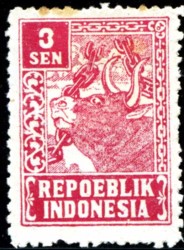
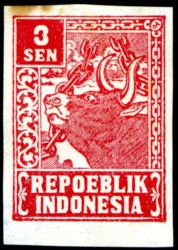
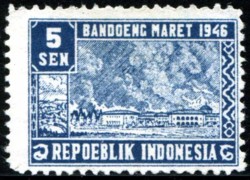 A large series of stamps, printed in Yogyakarta, appeared during 1946 and 1947 to commemorate the struggle for freedom. Such as the 5 sen stamp depicting a view of burning Bandung on March 24, 1946: Bandung Lautan Api. The stamps were poorly perforated and often also available unperforated.
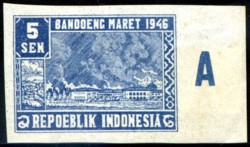
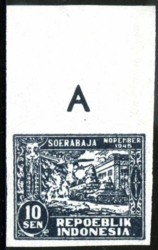
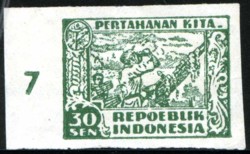
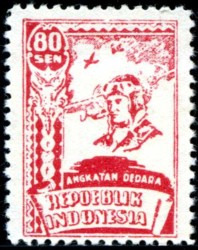
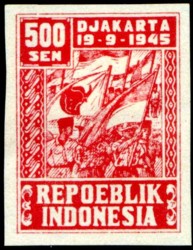
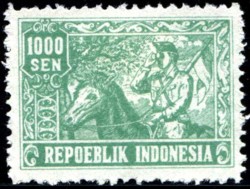 In addition to the commemorative series, three neutral stamps were also issued to form the long-running series. These were stamps in denominations of 50 sen, 60 sen, and 80 sen. The 80 sen stamp is rare. The unperforated 60 sen stamp is a proof print.
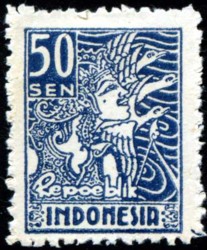
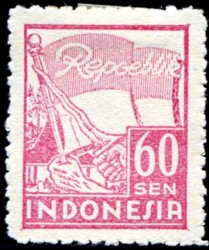
 On August 17, 1948, two stamps were issued to commemorate three years of independence. One of 50 sen and one of 100 sen. The stamps were initially available only unperforated and gumless, but later also perforated.
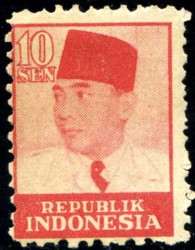 In December 1949, stamps were printed featuring an image of President Soekarno. However, these stamps were never made available at the counters. They exist in both perforated and unperforated versions and are always gumless.
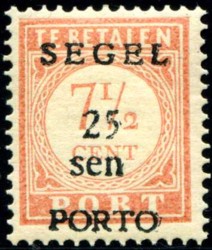
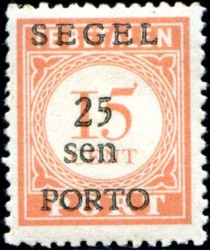 Two postage due stamps were also issued in 1948, overprints on postage due stamps from the Dutch East Indies. Some collectors may be familiar with a few of the stamps shown. But what is their status? Are they recognized and collectible? The answer is provided by the Indonesian PTT itself! On April 1, 1964, the Indonesian PTT issued a stamp to commemorate the 100th anniversary of the postage stamp in that country.
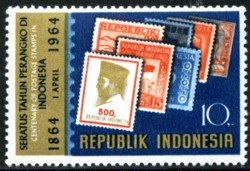
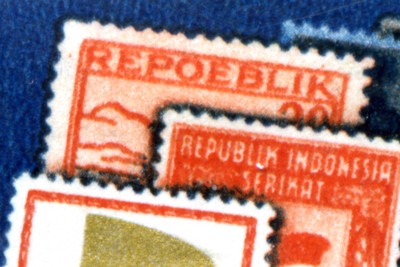 The 30 sen stamp issued on July 1, 1946, is clearly recognizable. But was that the only thing? No; on the 35th anniversary of Indonesia's independence, a series of three stamps was issued on August 17, 1980, featuring images of stamps from the long series of late 1946 and early 1947. But the third stamp? With an image that does not appear in the list above?
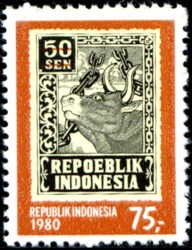
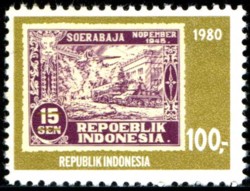
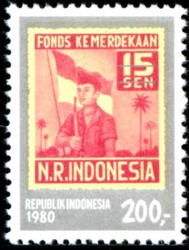 The explanation is as follows. The revolutionary stamps mentioned above were issued exclusively on the island of Java. On the island of Sumatra, other stamps were used, which were usually overprinted or newly printed in Palembang, South Sumatra. Such as the Fonds Kemerdekaan (Freedom Fund) stamp of 15 sen. This stamp came from a series of three issued on May 17, 1946, and printed in Palembang. The unperforated stamp is a proof print.
 What do you think of it? Now that the Indonesian PTT has recognized these stamps as postage stamps itself?


Cees, you provide a wonderful and beautiful description here of the historical developments surrounding the formation of the Republic of Indonesia. You yourself indicate that some stamps were not generally available. They are, of course, always collectible, as everyone is free to collect whatever they wish. Nevertheless, I consider a stamp to be a stamp only if it has been used for postage. Otherwise, it is and remains merely a piece of printed matter, whether of high quality or not.
Cees, I also think it is a wonderful overview once again! Given the number of stamps in the article, clickable but smaller images of the stamps were chosen for placement. After clicking, the stamps are displayed larger, so that the details are still visible.
@ Stamp Blog Readers: Have you noticed this, and what do you think of it?
'@Lia
If you pull these kinds of tricks on Bate's stories, they become truly unreadable 🙂
Keep it to a manageable size! Or will you be charged based on BitTransfer???
‘@Rein
Cost is absolutely not an issue here. Overview is. If you wish, you can always click through to the stamps and the image will be larger than it was previously in the blog.
It's a shame you're bringing up Bate's stories; I don't think that's relevant here.
'@Lia,
That is indeed handy if, as in the article above, you have multiple stamps side by side. If there are 1 or 2 stamps on a line, I would prefer to see them aligned across the full width of the column, so you don't have to click extra.
'@Lia
When it comes to the length of the story, yes, and then I would prefer to see every stamp at full size without having to click first and then jump back to the text….
Having to do this more than 40 times is much more annoying than having to scroll through a long text..
'@Toon: do you mean only stamps on used letters etc., or also stamps and postal items with the intention and in any case the possibility of actually throwing them in a mailbox, having them delivered by the postman etc.
‘@Dolores
In the presence of a postal service, a postage stamp is an a priori valid piece of paper for franking, which after some time turns out to have been used for franking within that postal service, or not.
The philatelic debate about mint versus used is one that resurfaces every so often, but has nothing to do with whether a stamp is a postage stamp or not…
Still, I only consider a stamp a stamp if it has been used for postage. Otherwise, it is and remains merely a piece of printed matter, of varying quality.
I agree with Rein's comment.
It is a pity that the third series of 2 pictured features a false print. For more information, I refer you to the website http://www.dainippon.nl